Most lantern advice assumes a wide mantel, a console table with room to spare, and a staircase worth decorating. If you rent a studio or live in a tiny home, you are working with three or four flat surfaces and a real reluctance to give any of them up. So the question changes. Instead of asking where a lantern would look good, ask where light is already missing after sunset.
That reframe is the whole checklist below. Each spot is a place where a small lantern solves something — a hallway no overhead fixture reaches, a counter corner that goes dim at dinner, a bathroom that turns into a cave at 2 a.m. — without demanding surface area you don't have.
1. The Entryway Shelf Above the Coat Hooks
That shelf is probably holding a key tray and a plant that is quietly dying. It is also the first dark thing you meet when you come home. A lantern 6 to 9 inches tall, set at one end rather than dead center, gives you a soft landing spot and something to aim for when your hands are full.
Keep it clear of the door's swing and clear of the hook where the bulky winter coat lives. If you want light without a cord snaking down the wall, choose a battery lantern with a built-in timer; most run a few hours each evening and then switch themselves off, which is exactly the behavior you want in a room you pass through.
If there is no shelf
Hang one. A single hook plus a lantern with a metal ring turns the narrowest entry into a lit one and costs you zero counter space. Check the hanging height against the tallest person in the house before you commit to the spot.
2. The Dead Corner of the Kitchen Counter
Every kitchen has one — the corner where the counter meets the wall, usually behind the coffee maker or the kettle. It collects crumbs and nothing else. A slim lantern, no wider than your toaster, turns that corner into a warm pool of light for early mornings and late dishes.
Heat is the thing to watch. Keep any lantern well away from the cooktop, never set a real candle under an upper cabinet, and give it a few inches of clearance from paper towels, dish towels, and anything else that could catch. If your lantern has a cord, route it along the backsplash rather than across the working counter, or choose battery power and skip the problem entirely.
3. The Bathroom Ledge
Look at the top of the toilet tank, the window sill, or the narrow shelf above the towel bar. Those ledges are dry, out of the way, and almost always empty. A lantern there does two jobs: it softens a room that usually has one harsh overhead light, and it gives you a low, warm option for middle-of-the-night trips so you are not blasted awake.
Humidity decides what you can use. Battery contacts corrode in damp rooms, and a real candle left in a steamy bathroom will soften and warp over time. Sealed metal or glass housings hold up best; an LED lantern with a rubber gasket is the safest pick. Whatever you choose, keep it off the edge and never on the rim of the tub or the back of the sink where a wet hand could knock it in.
4. The Wall Behind the Nightstand
The nightstand itself is obvious. The forgotten spot is the 8 to 10 inches of wall above it, or the floor beside the bed if the nightstand is barely wider than a phone. A small wall shelf or a single bracket holds a lantern at eye level when you are lying down, which is where you actually want the light.
If you go with a floor lantern instead, watch the scale. It should reach somewhere between mattress height and the top of the headboard — shorter and it reads as clutter, taller and it towers over a small room. Keep the cord well clear of the walking path between bed and door.
5. Hallway Corners and Stair Landings
A short hallway with one ceiling fixture in the middle leaves both ends dark. Set a lantern on the floor in the far corner, or on a stair landing against the wall where nobody steps. The light does not need to be bright. A dim lantern at a hallway end gives the apartment depth and makes a small space feel bigger rather than smaller.
Two rules here. Nothing goes on the stair treads themselves, and nothing blocks the path at the top or bottom of a flight. A lantern is a light source, not a doorstop, so keep it a hand's width back from the corner it sits in.
6. The Closet, Laundry Nook, or Desk Corner
These are the rooms-within-rooms that small homes collect: a closet with no ceiling light, a laundry closet behind folding doors, the end of a desk where the lamp does not quite reach. A tap-on LED lantern on the shelf above the washer or on the closet's upper ledge gives you light exactly where you need your hands, and it turns off when you leave.
On a desk, the trick is placement. Put the lantern behind your screen rather than beside it, so the glow bounces off the wall and does not fight your monitor. Warmer light is easier on evening eyes than the cool blue-white most desk lamps put out.
7. Window Sills, Balconies, and Porch Ledges
A lantern in the window does something no ceiling light can: it makes the room feel occupied from the outside, and it gives you a soft glow when you are sitting near the glass. Sills, balcony rails, and porch ledges all work, provided you account for weather.
Outdoors, choose a lantern rated for exterior use, or accept that you will bring it in every night. Hang it from a hook with a short chain rather than resting it on a railing where wind can tip it. And if the only outdoor spot you have is a fire escape, skip it — escape routes need to stay completely clear. Never leave a burning candle unattended, indoors or out, and keep flames away from curtains, bedding, and anything that hangs.
Rules for Adding Lantern Light Without Cluttering
Before you buy anything, hold up a sheet of paper where the lantern would go and look at it for a day. It is the cheapest way to test a footprint. Then follow these:
- One lantern per surface, unless you are deliberately building a group. If you do group them, three of different heights reads better than two of the same.
- Give it a job. If a lantern is not lighting a path, a task, or a wall, it is decoration — and decoration needs justification in a small room.
- Leave empty space around it. Two to three inches on each side keeps a lantern from looking crammed into a corner.
- Match the scale. A lantern should be roughly a third of the height of the surface it sits on, or clearly taller for floor placement.
- Stick to warm light for evenings — look for bulbs around 2200K to 2700K on the packaging. Cool white lanterns rarely look like lanterns.
- Prefer battery or timer over cords in apartments where outlets are scarce and renters cannot add wiring.
Your Five-Minute Walkthrough
Turn off every light in the apartment at dusk and walk the place with a notepad or your phone. Mark each spot that feels too dark: the entry, the hall end, the corner by the sink, the sill. Then pick two from that list — not seven — and place a lantern in each. Live with them for a week before you add more.
Two well-placed lanterns will do more for a small home than ten scattered ones. The point is not to fill every surface. It is to make the dark parts of your apartment feel intentional, and to leave the flat parts free for everything else you actually need to put down.
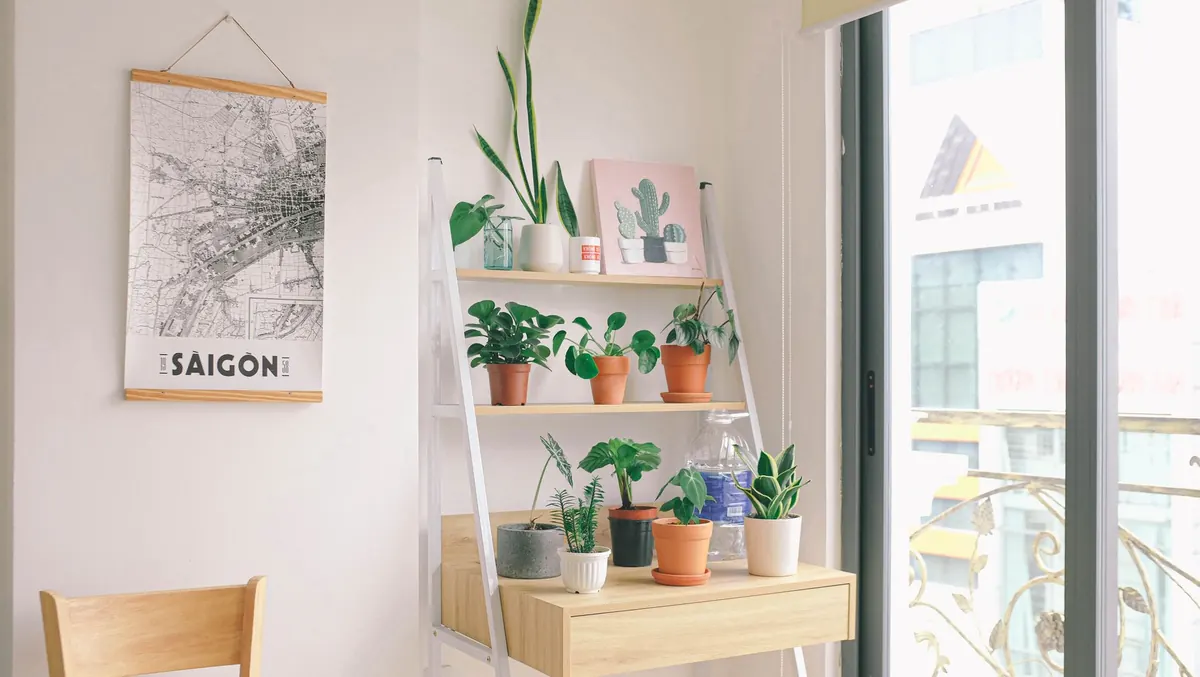
Photo: Huy Phan / Pexels