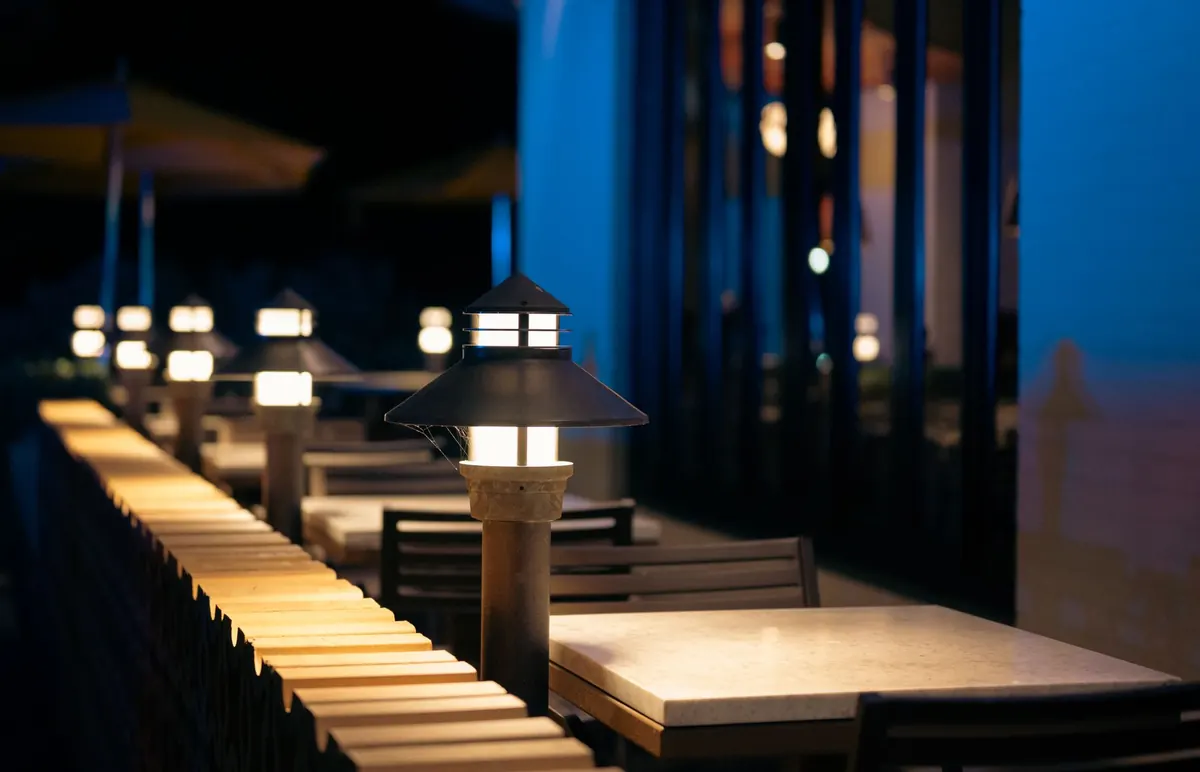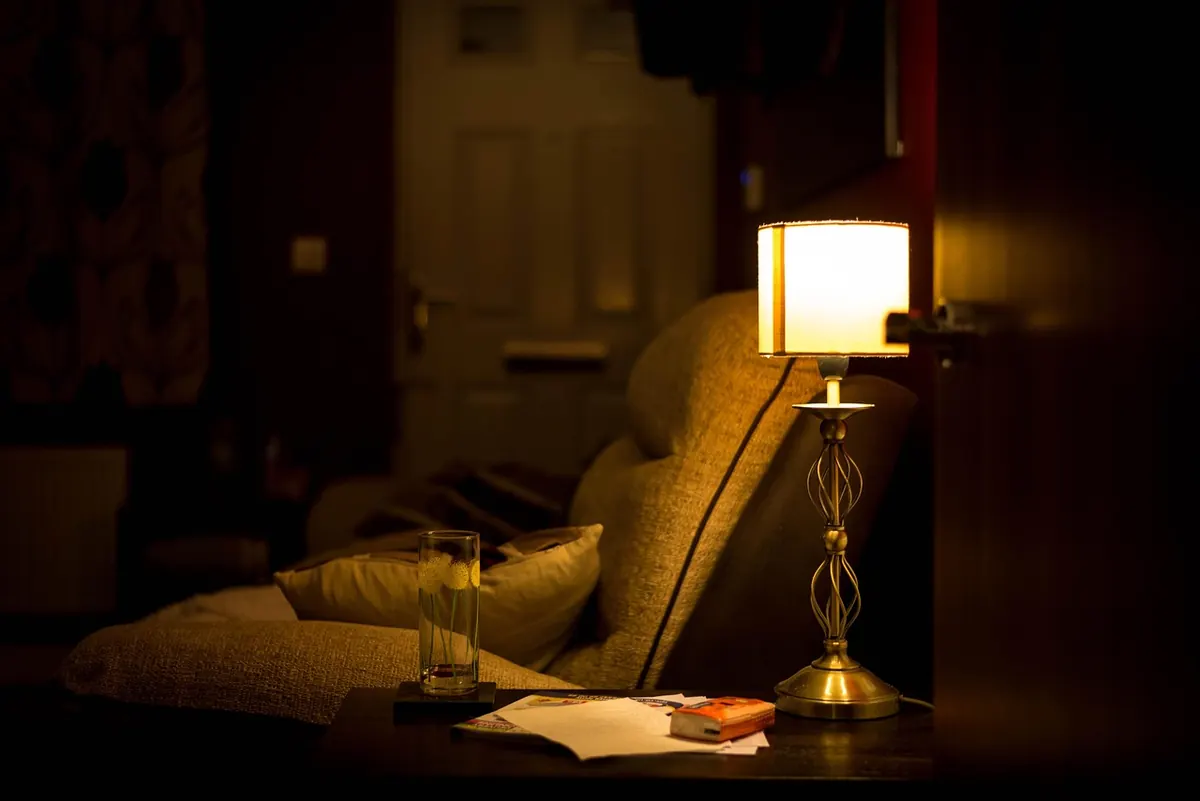
A single lantern in a dark room does one thing beautifully and one thing badly. It drops a warm circle onto the table, and it turns everything outside that circle into a hard black edge. The effect is dramatic for about ten minutes and tiring for two hours. More light isn't the answer. More kinds of light is.
Lighting designers work in layers—ambient, accent, task—and lanterns happen to be very good at all three, because they're portable, easy to dim, and forgiving of imperfect placement. One lantern can move from a hallway console to a dinner table to a bedside in the same evening. What matters is knowing which job each one is doing, so the layers support each other instead of competing for the same patch of wall.
The Three Layers, Translated Into Lanterns
Forget ceiling fixtures and switches for a moment. Layering with lanterns is about three overlapping pools of light that never let the room go fully dark.
- Ambient is the base wash: enough light to see faces, find a chair, cross the room. High shelves, hanging lanterns, a pair flanking a doorway. Soft, slightly dull, and deliberately unimpressive on its own.
- Accent is the one that makes the room interesting. It picks out a plant, a painting, a textured plaster wall, a row of books. Narrower beam, warmer tone, brighter per square inch than the ambient layer.
- Task is the lantern that has to actually work—reading, chopping vegetables, writing in a notebook, threading a needle. It doesn't need to be elegant. It needs to put light on your hands without shining into your eyes.
Most rooms lean hard on one layer. Usually ambient, which is why they feel flat and slightly institutional. Most decorative lantern setups lean on accent alone, which is why they photograph well and are useless after dark. You want all three, in descending order of how much floor they cover.
Bulb Warmth: Match the Job, Not the Lantern
Color temperature is measured in kelvin, and the useful band for lanterns is narrow. Candle-like bulbs sit around 2200K, standard warm white around 2700K, soft white around 3000K, and anything at 4000K or above starts to read as cool and clinical. That last group has its place in a workshop. It rarely belongs in a lantern.
What each layer wants
Ambient lanterns look best at 2200–2700K, dimmed low. Accent lanterns can use the same range with a slightly tighter beam or a higher output, since the light is aimed at an object rather than spread across a room. Task lanterns do better at 2700–3000K; if you're reading small print or matching fabric colors, 3000–3500K is easier on the eyes without feeling like an office.
Keep the whole room within one or two steps on that scale. A 2200K candle bulb and a 5000K daylight bulb in the same sightline will read as a mistake, no matter how good each one looks on its own. Check that your bulbs are dimmable and that the dimmer you're using is compatible—lantern dimmers and plug-in inline dimmers vary, and a mismatched pair will buzz or flicker. A color rendering index of 90 or higher is worth seeking out if the lantern sits near food, artwork, or fabrics. And many dimmable LEDs warm slightly as they dim, which is a quiet bonus for evening ambient light.
Height and Placement Do More Than Brightness
You can fix most lighting problems by moving a lantern six inches. Start with the light source itself: your eye should never see the bright part of the bulb. Everything else follows from that.
Ambient
Hang a lantern so the bottom of the shade sits roughly 30 to 36 inches above a dining table. That puts the light on faces and plates rather than in everyone's eyes. On a shelf or console, set the shade edge at or just above standing eye level, so the bulb disappears the moment you walk into the room.
Accent
Distance from the wall controls the shape of the pool. Eight to twelve inches gives a tight, crisp scallop of light on texture or art. Eighteen to twenty-four inches spreads into a soft wash that reads as ambient in a small room. Angling a lantern across a dark corner is the cheapest way to make a room feel larger than it is.
Task
Put task light beside your work, not behind your head. For a reading chair, a lantern slightly behind the shoulder is ideal—the shade blocks the bulb, and the page stays bright. At a desk, place it about twelve to sixteen inches to the side of the work, with the shade's lower edge just below your line of sight when seated. A bedside lantern should hide its bulb when you're propped against the headboard.
How to Avoid Single-Source Glare
Glare isn't caused by brightness alone. It's caused by contrast. When the brightest thing in your field of view is a bare bulb, your pupils close down, and everything else in the room gets darker by comparison. That's why one powerful lantern feels harsh while three modest ones feel calm.
A few fixes, in order of how much they help:
- Diffuse the source—frosted glass, paper, linen, or a perforated metal panel between you and the bulb.
- Choose lanterns with a lip, hood, or bottom diffuser that hides the bulb from seated and standing eye level.
- Use two dim lanterns instead of one bright one. Dim both to roughly half rather than running one at full.
- Keep shades matte inside. A glossy interior bounces a sharp image of the bulb straight back out.
- Move the lantern above or below eye level rather than directly across from where you sit.
If reading under a task lantern still leaves you with headaches or persistent eye strain after you've adjusted placement and brightness, that's worth a conversation with an eye care professional rather than more bulb shopping.
A Build Order That Works
- Turn the ceiling light off and sit where you'll actually sit—sofa, chair, kitchen stool. This is your test position for everything that follows.
- Place the ambient lantern first, high and slightly off-center, so it fills the room without becoming the focal point.
- Dim it to about half. The room should feel lit rather than spotlit.
- Add the accent lantern near whatever you want to look at, angled so the wall catches the light, not your face.
- Add task light last. Put a book or cutting board where you'll really work, then move the lantern until your hands are bright and the bulb is invisible.
- Stand in the doorway and look in. Scan for hot spots and black holes, then nudge one lantern at a time until both disappear.
Small Rooms, Rentals, and Awkward Corners
Short on outlets, or can't hang anything? Rechargeable lanterns handle corners a cord can't reach, and plug-in inline dimmers let you control a lamp without touching the wiring. Keep one spare battery or lantern charged, because a dark layer is more noticeable than a missing one. In a hallway, two small lanterns at either end beat one large one in the middle. In a narrow room, skip the center entirely and light along one wall.
Try Three Lanterns Tonight
One high, one low, one near your hands. Warm bulbs, both of the first two dimmed, and the third positioned so you can't see its source. Sit down with a book and read a page. If the room feels settled and the words are easy, your layers are balanced. If you're squinting at the page or shielding your eyes from the shelf, the correction is almost always placement, not wattage. Adjust once, live with it for a week, then tune the warmth and levels to suit the season and the hour.
Photo: tookapic / Pixabay